Does your feed have the proper level of cleanliness?
Feed hygiene is sometimes overlooked in the hustle and bustle of daily farm operations. It may not seem serious when a container is left open, a spill is not cleaned up, or storage is “just okay.”
However, the reality is that even minor mistakes can have major consequences, ranging from unexpected decreases in productivity to deteriorating animal health.
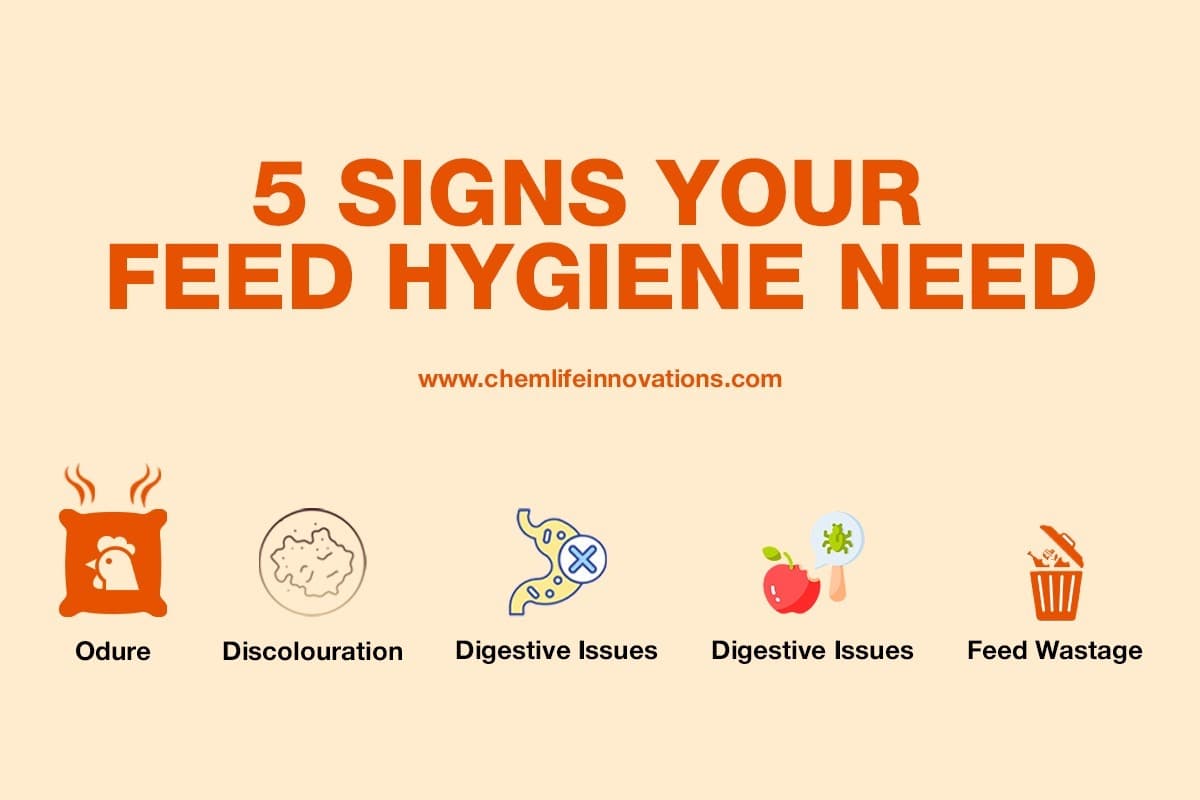
Let’s review five subtle signs that your feed hygiene may require immediate care, along with solutions to address them before they worsen.

1. Musty or Unusual Odour from Feed
A strong, musty, or sour smell often indicates the presence of mould or fermentation, usually caused by moisture intrusion during storage.
Contaminated feed may contain hazardous mycotoxins that impair immunity, affect liver function, and reduce livestock productivity—or even cause death.
Solution: Perform a routine “smell check.” If the feed smells odd, discard it immediately and inspect storage for leaks or moisture.

2. Visible Clumping or Discolouration
Clumps or greyish spots in the feed are early signs of mould or fungal growth.
Such feed loses its nutritional value and palatability, potentially leading to feed rejection and nutrient deficiencies.
Solution: Inspect feed daily for any physical changes. Ensure good ventilation, avoid dampness, and rotate stock regularly.

3. Increased Incidence of Digestive Issues
Frequent cases of bloating, diarrhea, or poor digestion could be linked to feed hygiene issues.
Contaminated feed can disrupt gut flora, hampering growth and reducing farm productivity.
Solution: Re-evaluate your feed handling—from delivery and unloading to storage and distribution. Get samples tested if problems persist.

4. Feed Storage Area Attracts Pests or Insects
Rodents, birds, or insects near feed storage usually signal poor cleanliness or containment.
Pests can contaminate feed and spread diseases, indicating the area is neither clean nor secure.
Solution: Maintain strict cleanliness around storage. Use sealed containers, high pallets, and proper ventilation to deter pests.

5. Frequent Feed Wastage or Spoilage
An increase in feed spoilage or waste may point to deeper hygiene or handling issues.Besides monetary losses, spoilage often reflects poor storage practices that impact the entire feed cycle.
Solution: Assess your storage: Is it dry, shaded, and clean? Are older stocks being used first? Apply the FIFO method and clean bins regularly.
Conclusion
While poor feed hygiene might not show immediate effects, it ultimately harms animal health, increases costs, and lowers farm output.
Detecting the signs early is the key to prevention.
Takeaway: Monitor feed hygiene as diligently as feed quality. Small changes in handling, storage, and inspections can protect both your livestock and your bottom line.
Now’s the time to thoroughly evaluate your current feed hygiene practices. A cleaner system today can prevent major losses tomorrow.
Questions about feed hygiene or our products?
Talk to our team