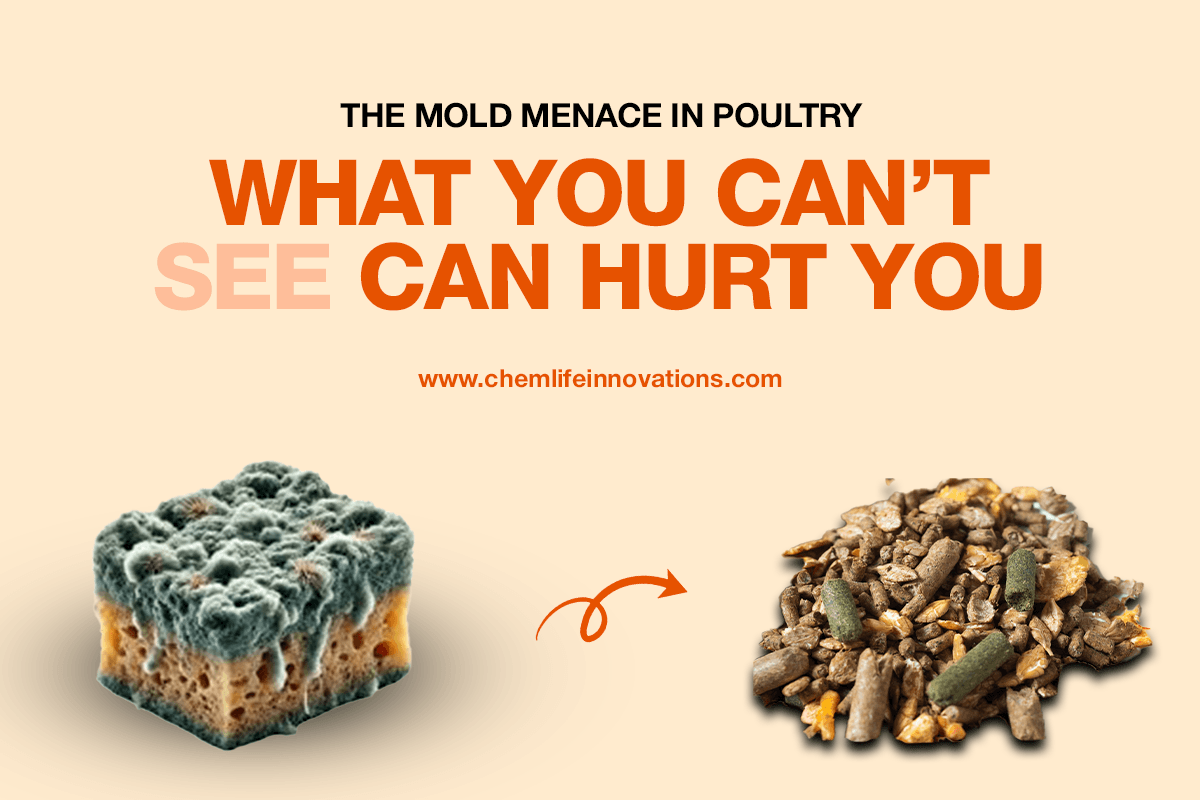
There are obstacles you can see and obstacles you can’t see in the chicken farming industry. The ones you are unable to see? They are frequently the most hazardous.
One such unseen foe is mold.
Mold might not seem like a big deal at first. It’s not as scary as a predator or as obvious as a virus. But don’t let that fool you. Mold can quietly harm your birds, ruin your feed, and cost you more than you think.
What is Mold, and Why Is It in My Feed?
Mold is a type of fungus that thrives in warm, humid environments. It loves feed items like corn, wheat, and soy—especially when they’re improperly stored. Even feed that appears clean can hide mold deep inside.
Worse still? Mold produces mycotoxins—invisible, odorless poisons that are highly dangerous to poultry, even in small amounts.
Unless you’re regularly testing your feed, you might not even know they’re there—until your birds start getting sick.
What Mold Does to Your Birds
Think of mold and mycotoxins as slow poisons. Symptoms develop gradually, making it hard to connect the dots back to feed contamination.
Here’s what mold-contaminated feed can lead to:
- Reduced immunity – Birds become more prone to infections and diseases.
- Reduced weight gain – Slower growth and poor feed conversion ratio.
- Impact on egg production – Fewer and weaker eggs in layers.
- Organ damage – Liver, kidney, and digestive system may be affected.
- Sudden death – Especially in extreme cases involving aflatoxins.
It’s not just about one sick bird—your entire flock’s performance and profitability could take a hit.
But the Feed Looks Fine
This is a common mistake among farmers. Most mold isn’t visible to the naked eye. By the time you see fuzz or smell something musty, it’s already too late—mycotoxins have likely formed.
Common methods like visual checks, sniffing, or tapping sacks may help detect severe contamination, but they miss the hidden threats. That’s why regular feed testing is essential.
Partnering with a veterinarian or nutritionist to test samples periodically can save your farm from major losses.
Where Is It Coming From?
Mold can infiltrate feed at any stage:
- During harvesting (excess moisture in crops)
- In storage (poor ventilation, humidity)
- During transport (humid containers, condensation)
- On the farm (open bins, careless handling)
Even one weak link in the chain can trigger mold growth. So, feed hygiene must include proper handling and storage practices—not just purchasing quality feed.
How to Keep Mold Away: Practical Tips for Every Farmer
Protecting your flock doesn’t require expensive tools. Here’s what you can do:
- Buy smaller feed quantities if your storage isn’t ideal.
- Keep feed away from moisture and sunlight using airtight containers.
- Place bags on pallets—never directly on the floor.
- Ensure storage spaces are dry and well-ventilated.
- Use feed within 2–3 weeks, especially in humid seasons.
- Clean feed bins regularly. Don’t mix new feed with old leftovers.
- Consider using mold inhibitors or toxin binders available in the market.
Prevention is always cheaper than cure.
Why You Should Take This Seriously
Let’s be honest—poultry farming is a tough business with tight margins. Even minor issues can disrupt your operations.
Mold won’t announce its arrival. It’ll silently reduce your birds’ health, lower your productivity, and cut into profits—while leaving you wondering what went wrong.
Awareness is already half the battle. With careful storage, regular checks, and preventive feed additives, you can ensure:
- Healthier birds
- Higher output
- Lower losses
- Peace of mind
Final Thoughts
Mold is silent but deadly.
It doesn’t make noise or show obvious signs, but it damages everything—from the health of your flock to the long-term sustainability of your poultry business.
Don’t wait for a visible crisis. Make mold awareness and prevention part of your daily routine—because what you can’t see can hurt you.
Questions about feed hygiene or our products?
Talk to our team