
Feed hygiene is a cornerstone of livestock management, directly impacting animal health, growth performance, and overall farm profitability. Contaminated or improperly stored feed can lead to serious health issues, including reduced immunity, digestive disorders, and in severe cases, mortality.
Implementing structured feed hygiene practices is therefore not just a precaution, it is an essential investment in your livestock’s wellbeing and your farm’s operational efficiency. Here are seven critical practices every farm should prioritize.
Use Mold Inhibitors
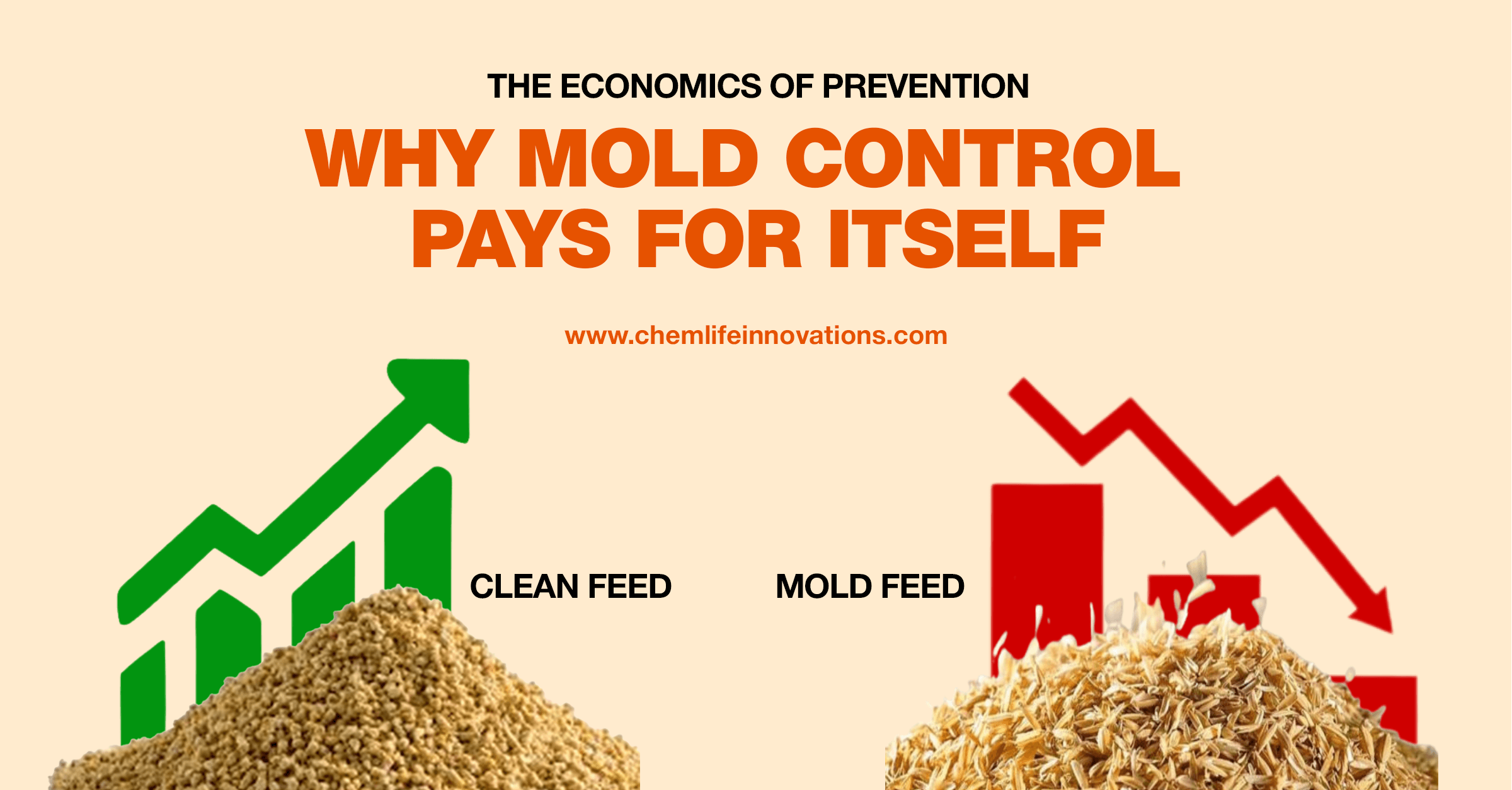
Moisture is one of the primary catalysts for feed spoilage. Wet feed encourages the growth of molds, which can produce harmful mycotoxins. Use of mold inhibitors & moisture optimization would help maintain optimal feed dryness.
These simple steps reduce mold growth, extend shelf life, and ensure that livestock consume feed that is both safe and nutritious.
Store Off the Ground
Storing feed directly on the floor exposes it to dirt, pests, and water seepage, increasing the risk of contamination. Using pallets, racks, or raised platforms keeps feed elevated and protects it from external hazards.
Additionally, maintaining a clean and organized storage area around feed bins further minimizes the risk of contamination. Off-the-ground storage is a simple yet highly effective way to preserve feed quality.
Rotate Stock (FIFO)
Following the First-In, First-Out (FIFO) principle ensures that older feed is used before newly purchased stock. This prevents prolonged storage, which can lead to spoilage, nutrient degradation, and mold formation.
Regularly monitoring stock and maintaining clear labeling of feed batches are practical measures to enforce FIFO and ensure livestock receive fresh, high-quality feed at all times.
Keep Bins Sealed and Dry
Properly sealed storage bins protect feed from environmental contaminants, moisture, and pests.
Using airtight bins or containers helps maintain feed integrity and prevents exposure to fluctuating humidity or accidental water ingress. Regularly inspecting bin seals and repairing any leaks is a crucial step in preserving feed quality over time.
Regular Mold Testing
Mold contamination is often invisible but highly detrimental to animal health. Routine testing for mold and mycotoxins allows for early detection and intervention.
Implementing a scheduled testing protocol especially during humid or wet seasons reduces the risk of feed-borne diseases and ensures that contaminated feed is promptly removed from circulation.
Avoid Over-Stocking
Excessive feed storage can lead to deterioration before consumption, particularly in warm or humid conditions.
Stocking only the quantity required for immediate or short-term use minimizes waste, reduces the likelihood of contamination, and optimizes storage conditions. Planning feed procurement based on livestock demand is both economical and safer for animal health.
Train Staff on Feed Handling
Even the best storage systems can fail if personnel are not trained in proper feed handling. Educating staff on hygiene practices, including careful handling, proper dispensing, and observing storage protocols, creates a culture of responsibility and vigilance.
Consistent training ensures that hygiene standards are maintained throughout the entire feed management process.
Implementing these seven practices creates a systematic approach to feed hygiene that safeguards livestock health, enhances productivity, and maximizes profitability. Farms that prioritize feed management not only reduce health risks but also build a foundation for sustainable and efficient operations.
Questions about feed hygiene or our products?
Talk to our team