Hot summer..!! You pick up a glass of water from a roadside Dhaba to drink, you surely will think about the source of water and whether it is purified or not. We all know we cannot live without water and more precisely without pure water. A few decades ago, the sources of potable water used to be from springs, rivers, or lakes. With the demand for water growing, groundwater has become one of the major sources. Water from these sources contains varying quantities of dissolved minerals, including macro minerals (Ca & Mg bring in hardness to water- found majorly in groundwater) as well as micro essential trace minerals. Because we aspire to have purified water for drinking, the only choice is to have a water purifier at home. While selecting the water purifier, the two questions that normally come up are the source of water and the various water purification techniques incorporated into the water purifier.
Most purifiers boast a Reverse Osmosis (RO) unit to convert hard water to soft by removing or reducing calcium and magnesium. Yet, it’s crucial to note that RO also strips away essential trace minerals like Copper (Cu), Manganese (Mn), Zinc (Zn), and Iron (Fe). Advanced purifiers have begun addressing this issue by reintroducing essential minerals back into the water. However, customer awareness remains low, and water purifier dealers often lack information on the quantity of added trace minerals and their compliance with BIS and/or WHO standards for potable water.
Let us take an example of one among the trace minerals, copper. Copper’s presence in drinking water cannot be overstated, as it is a necessary micro-nutrient that has a role in specific metabolic activities and also exhibits antimicrobial properties crucial for inhibiting pathogens. However, the demineralization & remineralization dilemma raises concerns about nutrient (Cu & other trace minerals) deprivation on one extreme and toxicity on the other.
From the toxicity point of view, too much copper is bad which can lead to gastrointestinal distress, nausea, diarrhea and long term exposure can cause anemia, liver damage & kidney issues. BIS standard IS 10500:2012 has indicated a permissible level of 1.5 mg/L of copper in drinking water. However, to determine if water from a purifier maintains copper levels below this threshold is certainly challenging & impractical for consumers.
Exploring the intersection of consumer rights, health awareness, and water purification reveals a pressing need for safe drinking water with the right balance of essential trace minerals. It’s also time to assess the quality of water provided to pets, farm animals, and livestock and develop suitable water purification systems tailored to species and scale.
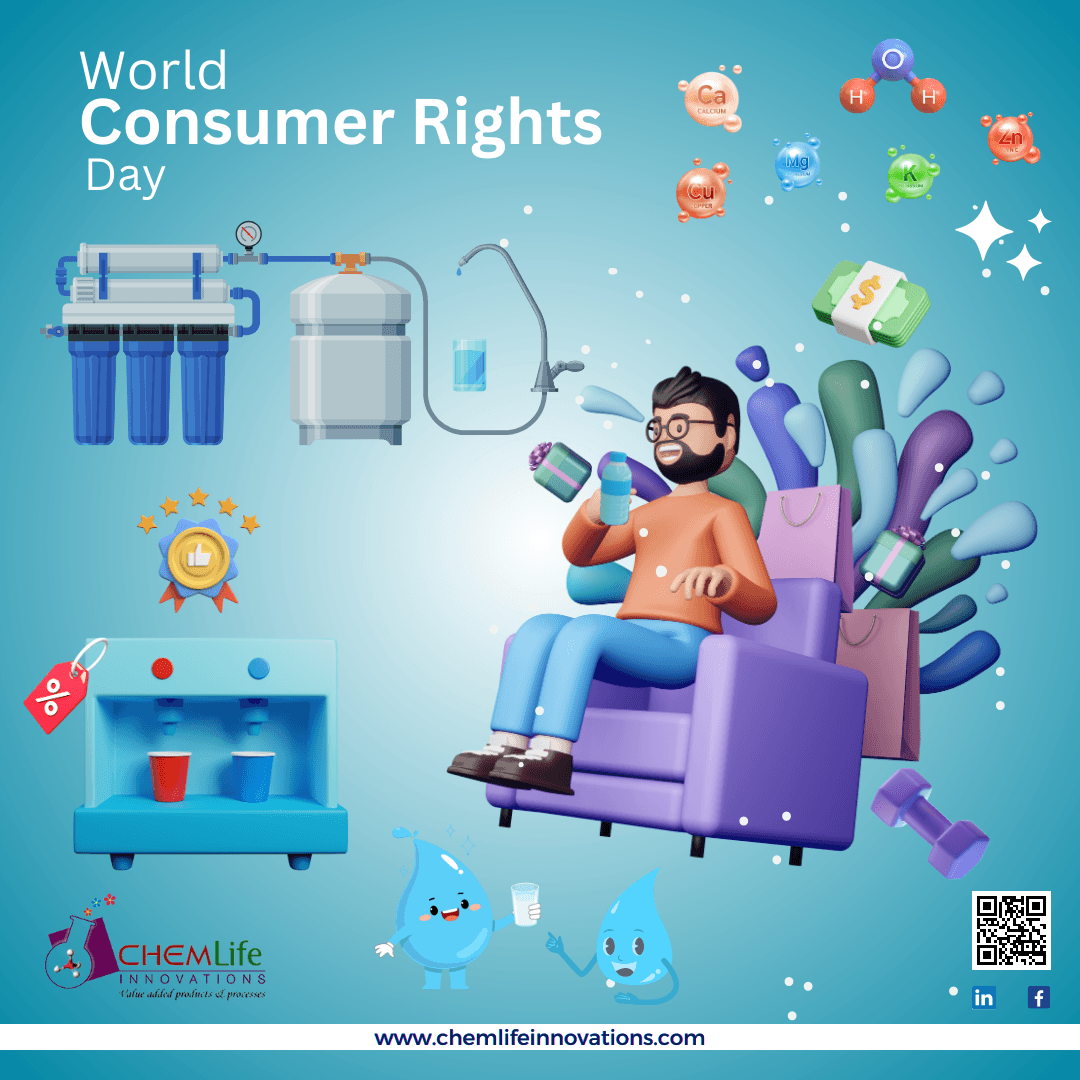
As we commemorate World Consumer Rights Day, let’s visualize the symbiotic relationship between consumer awareness and empowerment in water purification, advocating for safe, healthy, and nourishing water for both humans and animals.
Questions about feed hygiene or our products?
Talk to our team