Feed is treated with mold inhibitors to maintain its safety, freshness, and nutritional value. They lessen feed waste, promote bird health, and guard against spoiling. However, not all products function as intended, and farmers occasionally observe indications that the inhibitor isn’t working. Here are five important warning indicators to watch out for, along with suggestions on what to do instead.

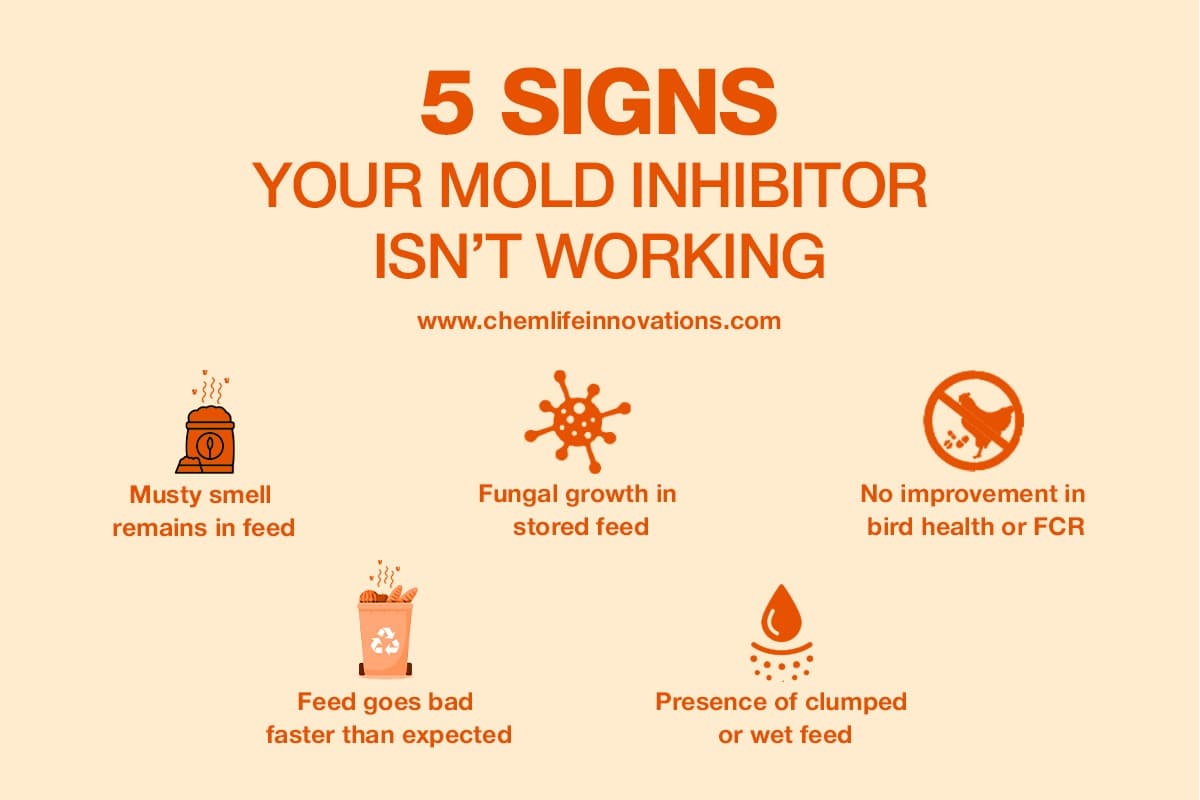
1. Musty smell remains in the feed
Fungal activity is evident in your feed, if it still has a musty or damp smell. Feed should smell clean and neutral after using a decent mold inhibitor. In truth, the first indication of spoiling is smell; if the bad odour persists, the inhibitor is useless. Instead, evaluate feed moisture, dose levels, and storage conditions. Change to a more dependable inhibitor if the odour continues.

2. Fungal growth in stored feed
One of the most evident signs is the presence of mould patches in bags or storage bins. Nutrient loss has already occurred by the time fungal growth becomes apparent. In reality, the inhibitor starts failing as soon as mold becomes apparent. Such feed may put the health or performance of the birds in danger. Instead, use mould inhibitors made especially for the stability of stored feed, enhance ventilation, and remove infected feed right away.

3. No improvement in bird health or FCR
Farmers employ mold inhibitors primarily to maintain fresh and nutrient-rich feed, which improves bird performance. The product isn’t working, if neither the feed conversion ratio (FCR) nor the health of the birds improves. In reality, growth, immunity, and productivity are all strongly impacted by feed quality. Birds can be impacted by mycotoxins, which are concealed mold toxins, due to an inadequate mold inhibitor. Instead, get the feed tested, monitor FCR, and make sure your mold inhibitor likewise stops mycotoxin production.

4. Feed goes bad faster than expected
Feed that has just been milled should be kept for a fair amount of time. Even with a mold inhibitor added, if it spoils too soon, protection is insufficient. In reality, feed stability is influenced by the mold inhibitor’s efficacy as well as storage. Feed deterioration at an early stage can cost you money and jeopardise the health of the animals. Instead, look at the type of mold inhibitor, storage cleanliness, and moisture levels. Certain products are only intended to provide temporary protection.

5. Presence of clumped or wet feed
Mold thrives in environments that are clumped together or have too much dampness. The product isn’t solving the issue if this persists,even after using mold inhibitor. The fact is that inadequate storage cannot be made up for by use of mold inhibitors. Wetness and clumping will cause mold development to resume rapidly. Instead, address moisture concerns first, enhance aeration, and employ a tested mold inhibitor that functions well in local storage settings.
Final Word
A mold inhibitor is your first line of defence for feed quality and bird health; it’s more than just a chemical. Don’t ignore the indicators pointing towards mold. Inadequate protection results in decreased performance, increased expenses, and feed loss. Always,keep a careful eye on your feed, evaluate your storage procedures, and select mold inhibitors that are dependable, tested, and appropriate for your farm’s requirements.
Questions about feed hygiene or our products?
Talk to our team