In this article
A typical addition to animal feed, particularly in pig and poultry production, is copper sulphate.
It contributes to immunity, growth, and the avoidance of several illnesses. However, a number of fallacies have emerged around its application over time, which can cause misunderstandings, abuse, and even injury.
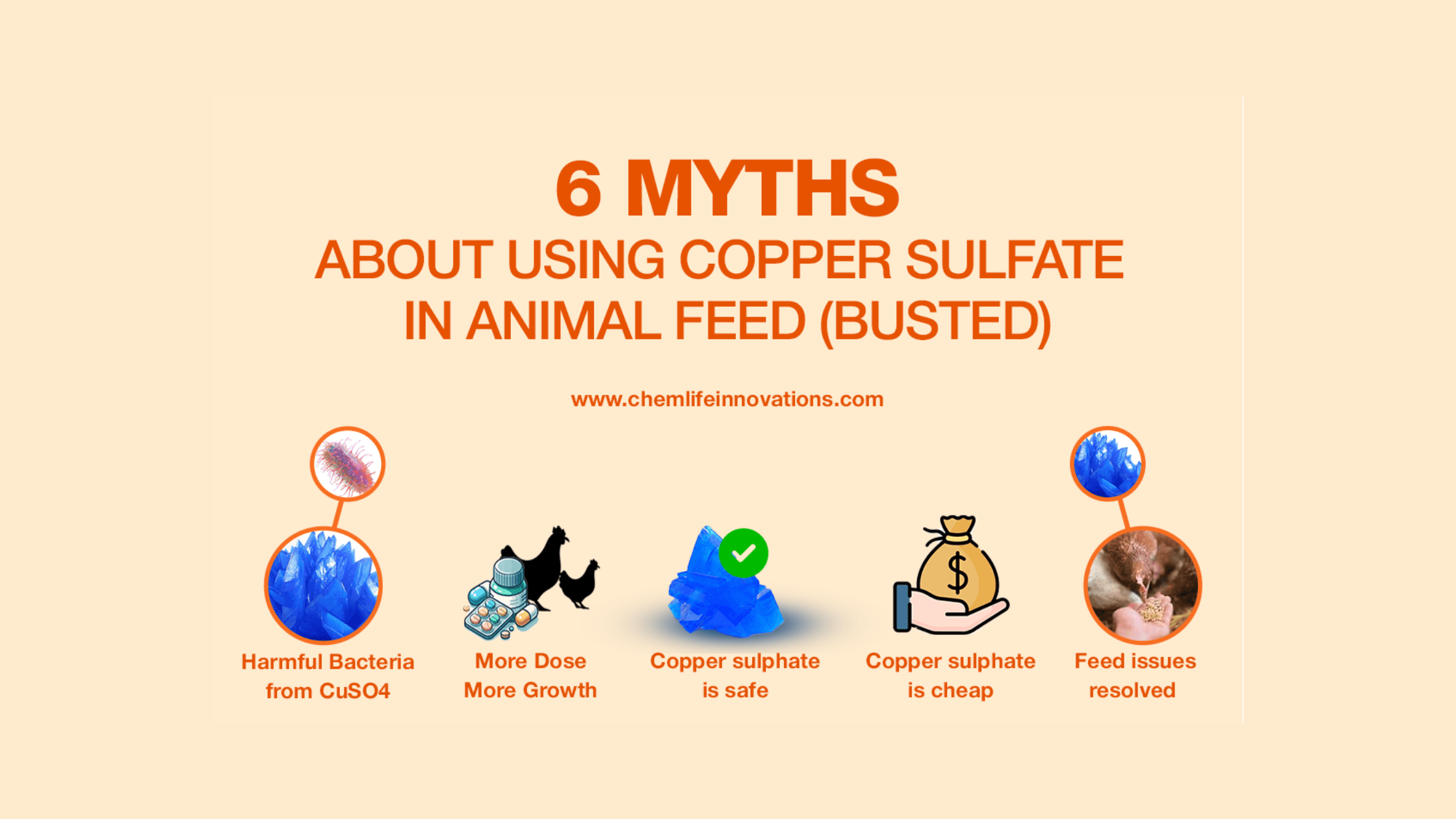
Let’s correct the record and dispel six of the most prevalent falsehoods.

1. All mold and harmful bacteria are eradicated by copper sulphate
The truth is that copper sulphate is not a universal mould killer, although it does have certain antibacterial qualities. Some bacteria and fungi can be controlled by it, but not all of them. Copper sulphate alone won’t solve the issue, particularly if mould has already spread throughout the feed.
What to do in its place:
Use mould inhibitors made especially for feed, pay attention to correct storage, and check for spoiling on a regular basis. Consider copper sulphate to be a supporting component rather than a remedy.

2. The better the growth, the higher the dose.
The truth is that, particularly when it comes to minerals like copper, more isn’t always better. Animals may be poisoned by high levels of copper sulphate, which can harm their liver, intestinal lining, and general health. In certain situations, it might momentarily boost growth, but excessive use over time is harmful.
What to do in its place:
Follow dose guidelines and get advice from a trained dietitian. Healthy growth is the result of balanced nutrition, not short cuts.

3. Copper sulphate is safe at all times.
The fact is that both the environment and the body can accumulate copper sulphate. Heavy metal buildup over time may endanger the health of animals and even the condition of the soil if manure is recycled.
What to do in its place:
Avoid long-term use without veterinary supervision, rotate supplements, and keep an eye on the feed’s copper content. Correct use is necessary for safe use.

4. It’s the least expensive choice available.
The truth is that copper sulphate has significant hidden costs despite its apparent low cost. Health problems, higher veterinary expenses, feed waste, and even decreased productivity might result from overuse.
What to do in its place:
Think about the entire cost, not just the purchase price. Long-term cost savings are greater when animals are healthier and feed is managed well than when prices are lowered.

5. It must be safe because everyone uses it.
The truth is that safe use is not synonymous with widespread use. Many farmers employ copper sulphate without properly comprehending the long-term impacts or dosage. What suits one breed, species, or area may not suit another.
Instead, focus your choices on professional guidance rather than fads. Your feed strategy should be tailored to the specific requirements of each farm and animal group.

6. All feed issues can be resolved with it.
The reality is that copper sulphate is not a panacea. It can be useful in certain situations, but it cannot take the place of correct storage, balanced diets, disease prevention, or adequate hygiene.
What to do in its place:
Adopt a comprehensive strategy. Pay attention to feed quality, supplements, storage, and routine health checks. Every issue cannot be resolved by a single ingredient.
Concluding
When handled properly, copper sulphate can be beneficial. However, depending too much on misconceptions can do more harm than good to your animals. Prior to altering your diet, always read labels, adhere to suggested amounts, and consult a veterinarian or nutritionist.
For farming well isn’t about believing myths. It involves making well-informed decisions that maintain the health of your animals and the productivity of your farm.
Questions about feed hygiene or our products?
Talk to our team