Food safety, shelf life, and quality all depend on proper storage. Food’s freshness and your health are directly impacted by how it is stored, whether in a restaurant pantry, a home kitchen, or a warehouse. Unfortunately, a lot of people unintentionally commit frequent errors that might result in waste, contamination, or spoilage.
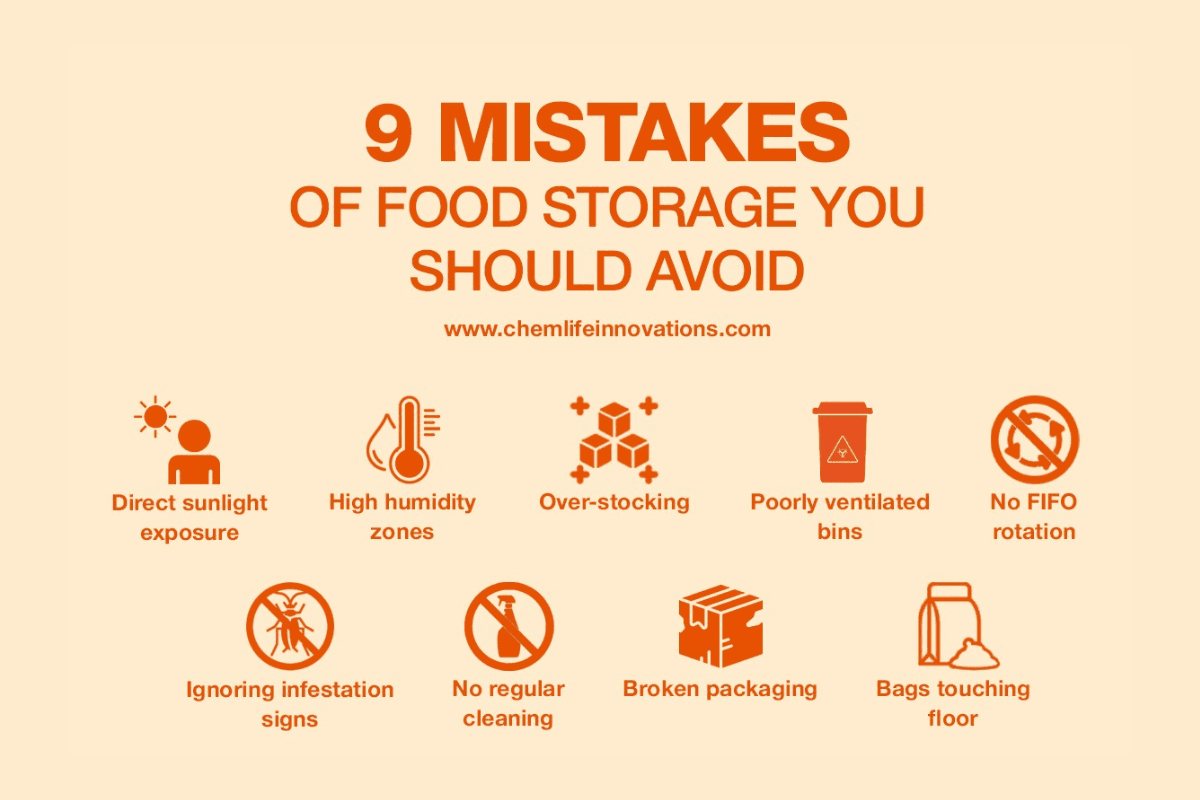
To keep your food fresh, secure, and long-lasting, you should steer clear of these nine food storage blunders.

1. Direct Sunlight Exposure
One of the quickest ways to degrade food quality is to store it in direct sunlight. Sunlight raises the temperature, hastening spoiling and perhaps turning oils rancid. When exposed to UV radiation, products such as cereals, wheat, and canned foods deteriorate more quickly.
Nutrients can be rapidly lost from even fruits and vegetables. Food should always be kept out of direct sunlight and away from windows and other heat sources. To lessen the amount of light that sensitive things are exposed to, use opaque containers.

2. High Humidity Zones
The silent enemy of food is humidity. The ideal conditions for the growth of mould, bacterial contamination, and pest infestations are produced by high moisture content. When exposed to moisture, cereals, grains, and spices readily clump together or lose their texture.
Dry goods should be kept in sealed containers. In humid storage spaces, use moisture absorbers or dehumidifiers. Make sure there is constant cooling for refrigerated storage to avoid condensation.

3. Over-Stocking
Kitchens and warehouses frequently make the mistake of overstocking shelves. Although purchasing in bulk may seem like a better value, packaging items closely together accelerates rotting and reduces air circulation. Furthermore, it increases the likelihood that items will be overlooked until they expire.
Follow the “buy what you need” principle. Keep shelves neatly arranged with enough room between items and rotate them regularly to prevent waste.

4. Poorly Ventilated Bins
Bins with inadequate ventilation retain heat and moisture, which fosters the growth of bacteria and the development of offensive odours. Fresh produce, which requires airflow to remain crisp and fresh, is particularly vulnerable to this.
Unless refrigeration is necessary, store fruits and vegetables in vented bins rather than airtight plastic bags. Bins should be cleaned and disinfected on a regular basis to maintain hygiene.

5. No FIFO Rotation
Many people disregard the important food storage rule known as FIFO, or First In, First Out. In the absence of FIFO rotation, newer products are consumed first while older stock finally expires in the back. Financial loss and needless waste result from this.
Place fresh stock behind older items at all times. To facilitate tracking, mark containers with the dates of purchase or expiration. Teach employees or family members to adhere to this system strictly.

6. Ignoring Infestation Signs
Never disregard indications of pests, such as insects, chewed packaging, or droppings. A minor infection can spread swiftly and contaminate a lot of food. Weevils, cockroaches, and rodents spread dangerous bacteria in addition to damaging supplies.
Keep an eye out for pest activity on food. If infestations continue, use pest-proof containers, seal crevices, and think about hiring a professional pest treatment company. Loss is always more expensive than prevention.

7. No Regular Cleaning
Bacteria and rodents are invited into storage spaces by dust, spills, and leftover crumbs. Neglecting routine cleaning can soon turn your warehouse or pantry into a haven for germs.
Make a cleaning routine as a tip. Clean shelves, hoover storage spaces, and sanitise containers on a regular basis. Spills should always be cleaned up right away to avoid attracting mould and pests.

8. Broken Packaging
The first line of defence against contamination in food is its packaging. The product can be compromised by air, moisture, and vermin due to broken or damaged packaging. The food’s shelf life is significantly shortened once the integrity of the packaging is compromised.
Examine the packaging both before buying and while it is being stored. As soon as possible, move damaged items into airtight containers. Steer clear of stacking things in a way that will tear the package.

9. Bags Touching the Floor
It is hazardous and unhygienic to let food bags rest directly on the floor. Dust, dampness, and bacteria are all present on floors and can get into the bags. It also increases the food’s susceptibility to bugs.
Always raise food bags at least six inches from the ground using pallets, shelves, or racks. This keeps supplies protected from infection and encourages air circulation.
Final Thoughts
Finding a location to store supplies is only one aspect of food storage; another is guaranteeing efficiency, quality, and safety. You can prolong the shelf life of your food, cut down on waste, and preserve a healthier environment by avoiding these nine frequent blunders, which range from disregarding FIFO rotation to exposing it to direct sunlight.
Proper storage practices save money, safeguard your health, and guarantee that every meal is served safely and fresh, whether you’re running a commercial kitchen or a home pantry.
Questions about feed hygiene or our products?
Talk to our team