One of the largest costs in chicken production is feed. To guarantee healthy, productive birds, farmers make significant investments in cereals, protein sources, and supplements. Mold, however, is a silent foe that has the power to reverse this investment. In addition to lowering nutritional value, mold in feed releases toxic compounds that have an adverse effect on bird health, egg production, and eventually farm profitability.
Here’s when prophylaxis is useful. Many farmers are reluctant to invest in mold control products because they believe they would increase expenses. In actuality, preventing mold contamination is far less expensive than repairing the losses brought on by sick flocks and spoilt feed. Let’s find out why mold control is a wise investment rather than a cost.

The Hidden Cost of Moldy Feed
Mold could initially appear to be a small problem, a small amount of grain that has turned discoloured or feed that smells musty. However, the economic harm is considerable.
- Loss of Nutrients
Mold eats up important elements in feed. Despite the farmer spending the same amount on feed, birds receive less nourishment as energy, protein, and vitamins decrease. - Decreased Productivity and Growth
Moldy feed causes birds to consume less and grow more slowly. Broilers might not reach market weight in time, and egg-laying chickens might lay fewer eggs. Revenue loss is a direct result of these productivity declines. - Risk of Mycotoxin
Toxins released by some molds impair immunity, spread illness, and lower poultry reproduction. Mortality rates may increase, and birds may require veterinarian attention. Even worse, these pollutants can find their way into meat and eggs, which raises questions about food safety. - Waste of Contaminated Food
Whole batches of feed may need to be thrown out once the mold has spread. This can result in tons of grain being wasted and thousands of rupees being lost in a single incident for large farms. When combined, these factors make mold contamination one of the costliest problems in poultry farming.

Prevention vs. Losses: A Cost-Benefit View
Let’s analyse a straightforward example to better grasp the economics.
Let’s say a farm buys 100 tons of poultry feed annually. Up to 10% to 15% of feed may spoil from mold if mold protection measures are not taken. Ten to fifteen tons have been lost.
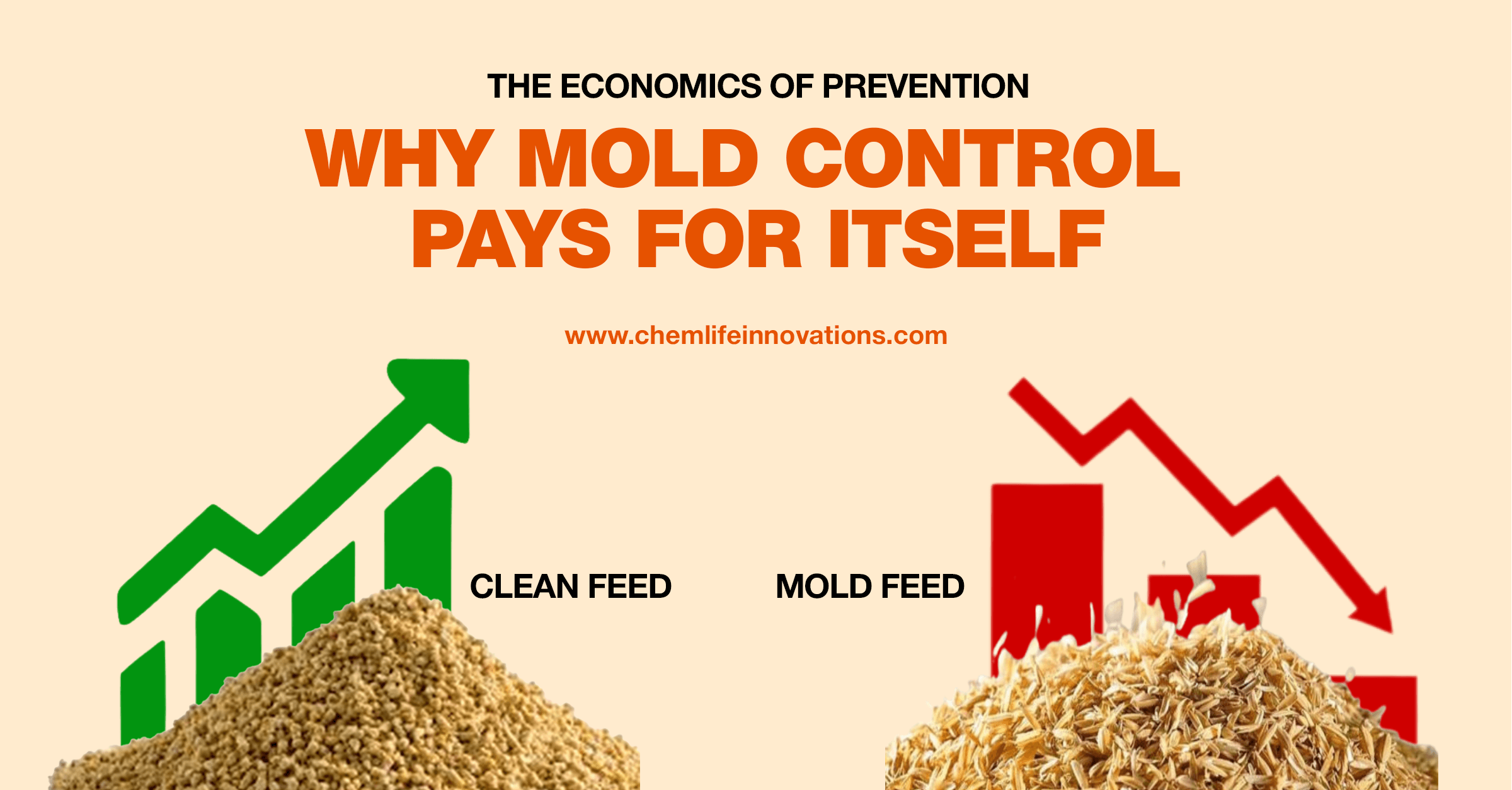
If the average cost of feed is ₹25,000 per ton, the annual losses from lost feed alone would be ₹2.5 to 3.75 lakh. Now contrast this with prevention: it may only cost ₹500 to 1,000 per ton of feed to use natural mold control chemicals or follow proper storage procedures.
An annual investment of ₹50,000 to ₹1,00,000 is required for 100 tons. Even at the higher end, prevention costs are far lower than the losses caused by mold spoilage. And this calculation doesn’t even include savings from healthier birds, better productivity, or reduced veterinary expenses.
In other words: spending ₹1 on mold prevention can save ₹3–5 in losses.

Benefits of Mold Control Beyond Money
Mold control has obvious economic benefits, but it also has other advantages that contribute to a farm’s longevity.
- Higher Yields, Healthier Birds
Clean feed causes birds to grow more quickly, lay more eggs, and exhibit fewer symptoms of disease. The need for antibiotics and veterinary care is decreased when immunity is stronger. - Improved FCR (feed conversion ratio)
Birds consume nutrients more effectively when fed clean feed. Profitability is increased as a result of reduced feed consumption per kilogramme of weight gain. - Assurance of Food Safety
Farmers guarantee safer food for consumers by limiting the transfer of mycotoxin into meat and eggs. This preserves market reputation and fosters trust. - Sustainability
Reducing feed waste entails making better use of the energy, water, and land used to produce grains. It synchronises farming methods with the objectives of sustainable agriculture. - Natural Mold Control Solutions
Many farmers believe that strong herbicides are necessary to prevent mold. In actuality, there are natural, safe alternatives that may be applied without compromising the quality of the feed. Among these are plant-based or herbal compounds that naturally prevent the growth of mold.
- Toxin binders that neutralise mycotoxins are manufactured from clay or yeast extracts.
- Appropriate storage procedures, such as maintaining feed’s dryness, ventilation, and pest-free status.
- Frequent testing and monitoring are necessary to identify contamination early.
Compared to heavy chemical preservatives, these alternatives are more economical, safe for animals, and better for the sustainability of farms over the long run.

Why Farmers Hesitate
Why don’t all farmers use mold control techniques if the advantages are so obvious? The primary causes are:
- Short-term thinking: Rather than viewing prevention as an investment, farmers view it as an additional cost.
- Lack of knowledge: A lot of people don’t realise how much mold can cost them.
- Inconsistent methods: Inadequate handling or storage might negate the advantages of mold control, even for farmers who employ it.
Better access to natural mold control solutions, farmer training, and awareness campaigns are all necessary to remove these obstacles.
Conclusion
Mold in chicken feed is a business concern as well as an agricultural problem. The cost of prevention is greatly outweighed by the hidden costs of decreased productivity, feed waste, lost nutrients, and food safety risks. Farmers safeguard their business line and guarantee that consumers are eating safe food by investing in natural mold management and proper feed hygiene.
The math is clear: prevention is far more cost-effective than treatment.
The next time you consider reducing feed hygiene expenses, keep in mind that every rupee you save on prevention could result in losses if mold grows. Prevention is essential in poultry raising. The best investment you can make is this one.
Questions about feed hygiene or our products?
Talk to our team